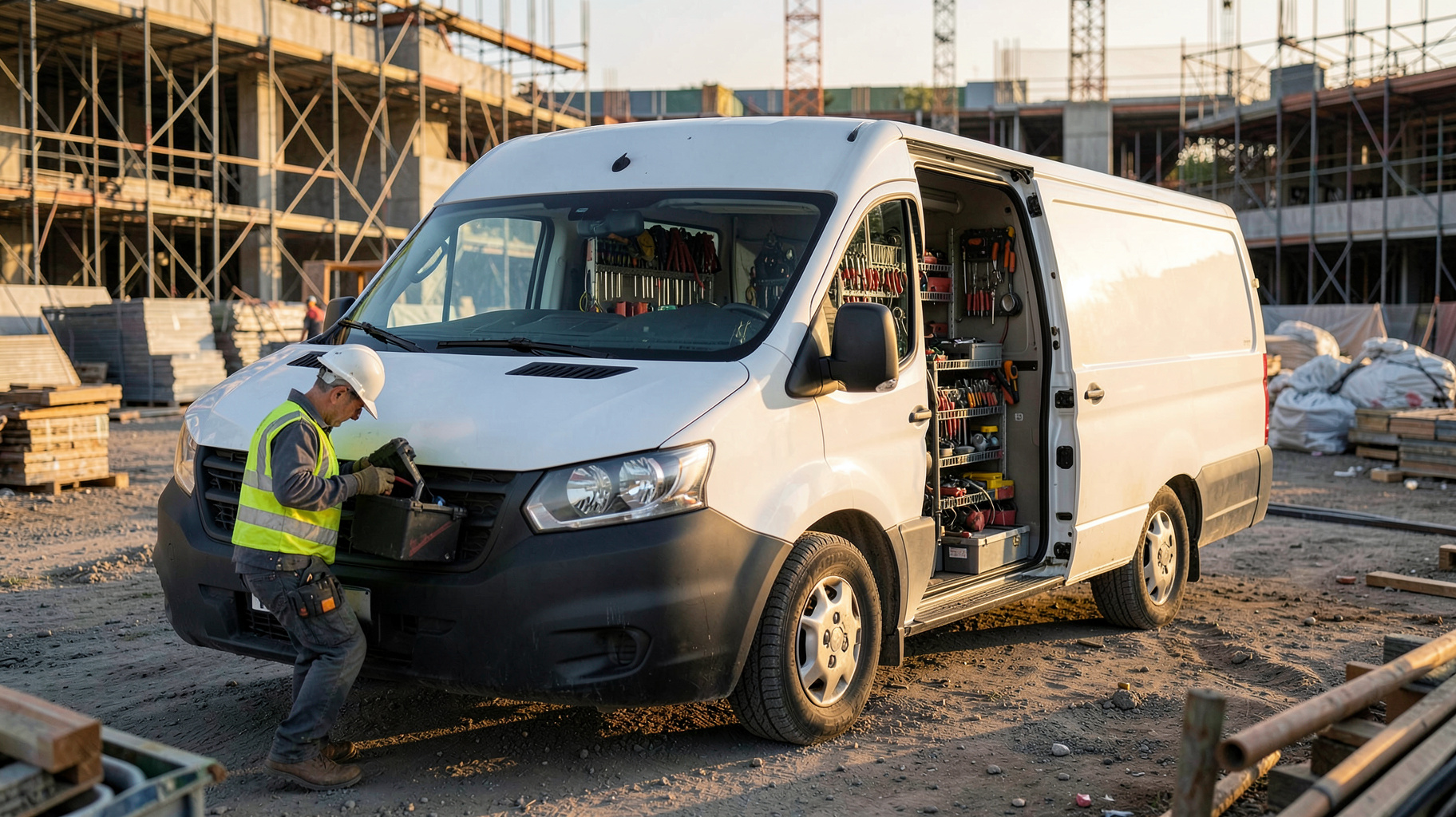

A personal auto policy can deny a claim if your van was hauling tools and parts
Key Coverage Types Every Shop Vehicle Policy Should Include
Liability is the foundation. It pays for injuries and property damage you cause to other people. Many states set minimums as low as $25,000 per person, which a single hospital stay can blow through. For a van that's on job sites every day, I'd choose a $1 million combined single limit. Skip the split limits like 100/300/100. A single combined limit is simpler, and a claim can draw on the whole amount however it's divided. Moving from $500,000 to $1 million usually costs a modest amount per vehicle, often a few hundred dollars a year. That's a rule of thumb, not a quote.
Physical damage covers your own vehicle. It comes in two parts:
- Collision pays to repair the van after a crash, whoever's at fault.
- Comprehensive covers theft, vandalism, fire, hail, and a branch through the windshield.
Pick a $1,000 deductible over $500 if you can absorb that cost. The savings on premium are real, and you won't be tempted to file small claims that mark your record.
Tools and equipment need their own line. Most vehicle coverage treats what's inside the van as cargo you're on your own for, and shelving, racks, and bins bolted to the floor may not count either. An inland marine or tools-and-equipment endorsement covers them. As a rough guide, $10,000 to $25,000 of coverage is common for a one-van shop. Add up your actual inventory first. Most owners find it's higher than they guessed.
Theft is the usual reason to claim here. Check whether the policy covers tools left overnight in a locked van, because some exclude it unless there are visible signs of forced entry.
Hired and non-owned auto. This appl
Factors That Determine Your Shop Vehicle Insurance Premiums
Hired and non-owned coverage is usually the cheapest line on the policy, often under a few hundred dollars a year for a small shop. The rest of the price comes from a handful of factors, and some of them you can control.
The van itself. A cargo van with a $45,000 sticker costs more to insure than a $20,000 used one, because collision and comprehensive are priced on replacement cost. Add ladder racks and shelving and the value goes up again.
What you do with it. Underwriters ask about your trade, how far you drive, and where. A plumber who stays within 30 miles of the shop pays less than a mobile installer crossing three counties. Be accurate about your mileage. Understating it can hurt you at claim time.
Who drives. Motor vehicle records matter more than almost anything else. As a rule of thumb, one at-fault accident or a serious ticket can raise a driver's rate 20% to 40% for three to five years. That's a general pattern, not a quote.
List only people who actually drive the van. Don't pad the policy with every employee, and don't leave off the one who covers for you on Fridays.
Where it's parked. A van garaged in a locked lot in a
How to Compare Providers and Choose the Right Policy
fenced yard usually rates better than a street spot, so tell every carrier where the van sleeps at night.
Get three quotes, and make them identical. Use the same limits, the same deductibles, the same driver list, and the same tools coverage on each. If one quote is 30% cheaper, check what's missing before you celebrate. Quotes for the same van often differ by 20% or more between carriers. That's a rule of thumb from experience, not a measured figure.
Use an independent agent who writes commercial auto. I'd pick that over a direct-to-consumer website. An agent can quote five or six carriers in one afternoon and knows which ones accept a plumber's van and which ones balk at a mobile welder. Online forms tend to push you toward personal-style coverage, and that's the trap this whole post is about.
Ask about the tools endorsement first. Remember the point about tools and shelving not counting as part of the vehicle? Plenty of quotes leave that line out, and it's the one you'll miss when someone breaks a lock.
Read the exclusions, not just the declarations page. Look for:
- Overnight tool theft without forced entry
- Limits on tools per item, such as $2,500 each
- Mileage or radius restrictions
- Any rule about employees driving the van
Check the carrier's financial strength. AM Best publishes ratings, and I wouldn't go below A-. A cheap policy from a shaky company is worth little when you file.
Call the claims line before you buy. Ask how long a typical repair approval takes and whether you can use your own body shop. If you can't get a straight answ
Before You Sign
A personal auto policy won't hold up when your van is working. Buy commercial coverage with a $1 million combined single limit, a $1,000 deductible, and a tools endorsement sized to your real inventory, likely $10,000 to $25,000. Expect a few hundred dollars a year for the higher liability limit. That's a rule of thumb, not a quote.
Skip the direct-to-consumer forms.
Call an independent agent this week, ask for three identical quotes, and have tools coverage on every one.