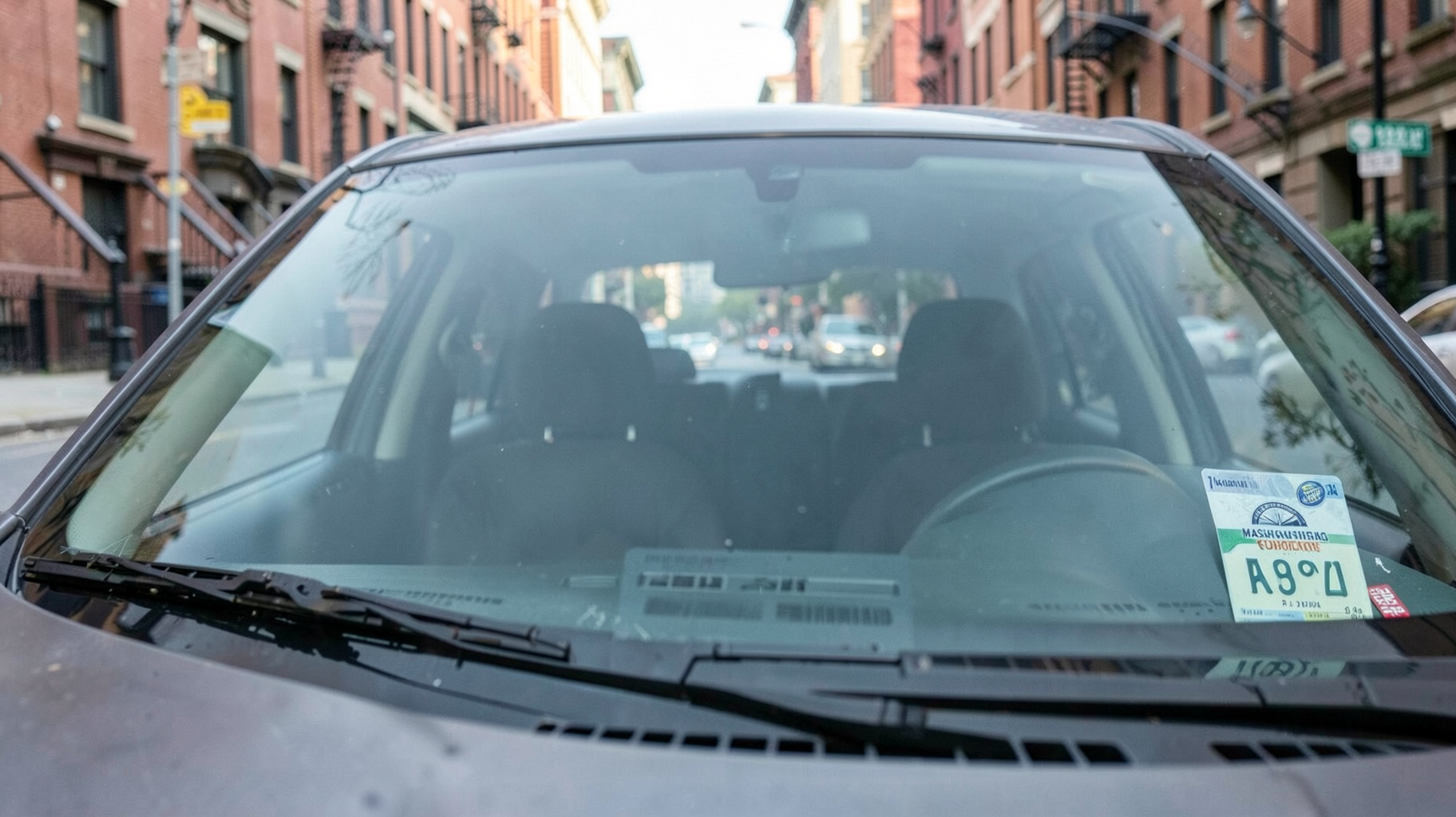

Massachusetts requires every registered car to carry insurance, and the state's minimums are lower than most drivers should actually buy. You'll come away knowing what the law demands, what pushes your premium up or down, and how to compare quotes without paying for coverage you don't need.
That matters because one at-fault accident can easily cost more than the min
Massachusetts Compulsory Auto Insurance Requirements and Minimum Coverage Limits
Massachusetts makes you carry four coverages, and the limits are low.
- Bodily injury to others: $20,000 per person and $40,000 per acc
Key Factors That Determine Auto Insurance Rates in Massachusetts
Those minimums set the floor. What you actually pay depends on a handful of factors, and some you control more than others.
Where you park the car. Massachusetts rates by territory, and your garaging ZIP code matters a lot. A driver in Boston, Chelsea, or Brockton can pay hundreds more per year than an identical driver in the Berkshires. Moving is rarely worth it for insurance alone, but expect your quote to change if you do.
Your driving record. This is the biggest lever. The state's Safe Driver Insurance Plan (SDIP) assigns points for at-fault accidents and moving violations, and every company applies the resulting surcharge. A minor violation is typically 2 points, an at-fault accident 4. As a rule of
How to Compare Providers and Choose the Right Massachusetts Policy
thumb, assume a surcharge sticks around for years, so the quote you get after a ticket isn't the quote you'll have forever.
That's why comparing matters. Insurers weigh the same record differently, and the gap between companies for one driver can run several hundred dollars a year.
Get the quotes right
Collect at least four. Make sure every one uses identical limits, deductibles, and drivers, or you're comparing nothing.
Here's the setup I'd use:
- Liability: 100/300/100 ($100,000 per person, $300,000 per accident, $100,000 property damage). That's a rule of thumb, not a legal figure. It usually costs far less than people expect over the state minimum, often tens of dollars a month.
- Collision and comprehensive: only if the car is worth more than roughly $4,000 to $5,000. Below that, a few years of premiums can exceed what the car would pay out.
- Deductible: $1,000 over $500, if you have the cash on h
Before You Buy
The state minimum of $20,000/$40,000 for injuries won't cover a serious crash. Buy 100/300/100 instead. It's a rule of thumb, but it usually costs only tens of dollars more a month.
Your record and ZIP code drive the price, and you can't change either quickly.
Your quote is the part you can change. Get four quotes with identical limits and deductibles, then pick the cheapest one at 100/300/100.